 11
11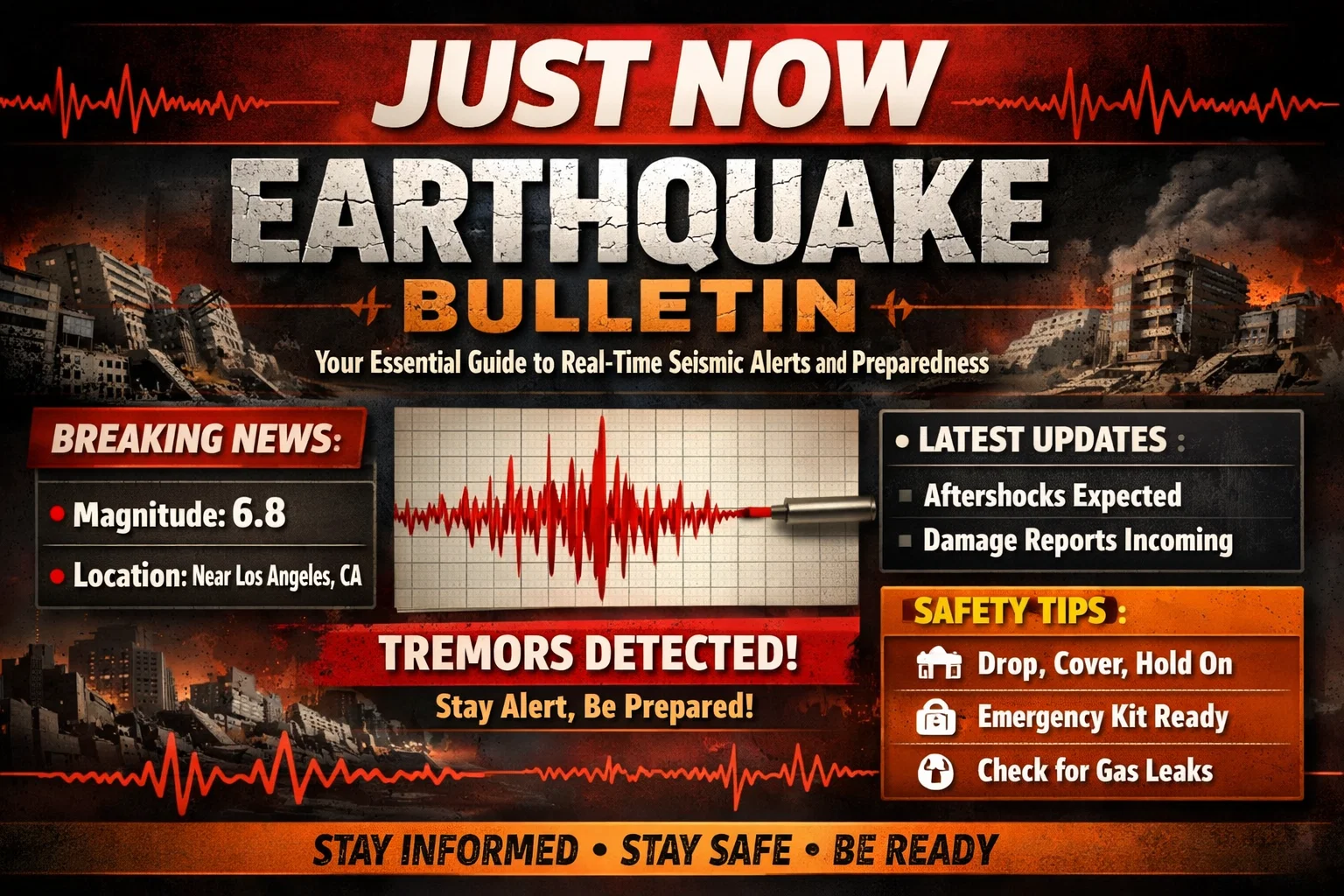
In our fast-moving world, a single notification can change how you see the day ahead. When a “Just now, earthquake bulletin” pops up on your phone or news feed, it cuts through the noise with urgent, verified details about a seismic event that has just happened. These bulletins are not random scare tactics; they are carefully crafted messages built from data collected by global monitoring networks. They tell you the magnitude, the exact location, the depth, and often the first hints of possible aftershocks or tsunami risks. For anyone living in or near active fault lines, that quick heads-up can mean the difference between chaos and calm action.
What makes these bulletins so powerful is their immediacy. In the past, people learned about earthquakes hours or even days later through newspapers or radio. Today, the “Just now, earthquake bulletin” reaches millions within minutes because of interconnected seismographs, satellites, and smart algorithms. Whether you are sipping tea in Karachi, driving through the mountains of Balochistan, or relaxing on a beach in Indonesia, the alert feels personal because it is designed to be. It respects your need to know right away without overwhelming you with technical jargon. Instead, it focuses on what matters most: where it happened, how strong it was, and what you should consider doing next.
As we explore this topic together, you will see how these bulletins fit into a bigger picture of science, technology, community resilience, and personal safety. We will look at how they work, why they matter more than ever, and how ordinary people like you and me can use them to protect what we love. The goal is simple: turn that moment of surprise into a moment of smart response. Earthquakes may be unpredictable, but our reaction to them does not have to be.
A “Just now, earthquake bulletin” is essentially a real-time public service announcement about seismic activity. It comes from trusted sources that constantly watch the Earth’s movements using sensitive instruments placed all over the planet. When the ground shakes enough to register on multiple sensors, the system quickly calculates the size, location, and potential effects. Within seconds to a few minutes, the bulletin goes out through apps, websites, television tickers, and emergency alert systems.
The phrase itself carries a sense of urgency that people have come to recognize. It tells you the event is fresh, not something that happened yesterday. This timing matters because the first few minutes after a quake are when people need clear information the most. Panic can spread faster than the shaking itself, especially in crowded cities or remote villages. A well-written bulletin cuts through fear by giving facts first. It might note whether the quake was shallow or deep, onshore or offshore, and whether nearby areas should prepare for aftershocks.
Beyond the basic facts, these bulletins often include links to official maps, safety reminders, and updates as more data comes in. They help bridge the gap between experts who study tectonic plates and everyday folks who just want to know if their family is safe. In regions like South Asia, where the Indian plate pushes against the Eurasian plate, such bulletins have become part of daily life for millions living along the Himalayan belt. They remind us that the Earth is always moving, but we now have tools to listen closely and respond wisely.
The journey from a tremor deep underground to a notification on your screen is surprisingly fast and sophisticated. It starts with a worldwide web of seismometers that detect even the tiniest vibrations. When several stations pick up the same signal, computers automatically calculate the epicenter and magnitude using complex mathematical models. Artificial intelligence then checks the data for accuracy and rules out false alarms caused by construction blasts or heavy traffic.
Once verified, the information is pushed through multiple channels at once. Government agencies, international seismology centers, and private tech companies all work together so that a “Just now, earthquake bulletin” reaches as many people as possible. Mobile apps use push notifications, while websites update live maps that show the quake’s location with a bright red marker. Some countries have integrated these alerts into national emergency broadcast systems that can override radio and TV programming.
What makes the process even more impressive is the human touch added at the end. Seismologists review the automated report before it goes wide, making sure the wording is clear and helpful rather than alarming. They might add notes about expected aftershocks or whether a tsunami watch has been issued. This balance of speed and care turns raw data into something you can actually use. For someone in a high-rise building in a busy metropolis, those extra seconds of reliable information can mean taking the stairs instead of the elevator or helping a neighbor who needs extra time to move.
Over the years, these systems have grown smarter. They now learn from past events and user feedback to improve future alerts. The result is a network that feels almost alive, constantly watching and ready to tell us when the ground beneath our feet decides to shift.
Earthquake reporting has always been about sharing life-saving information as quickly as possible, but the methods have changed dramatically. Ancient civilizations recorded quakes on stone tablets or in royal chronicles, often mixing observation with myth. By the 1800s, telegraph wires carried the first near-instant messages across continents. Newspapers printed special editions, but the public still waited hours or days for details.
The 20th century brought real progress. The invention of the seismograph allowed scientists to measure quakes more precisely. After major disasters like the 1906 San Francisco earthquake, governments started building dedicated monitoring agencies. Radio and then television brought voices and pictures into living rooms, but the true revolution arrived with the internet and smartphones.
Today’s “Just now, earthquake bulletin” is the direct descendant of those early efforts, now supercharged by digital speed. What once took days now takes seconds. This shift has saved countless lives by giving people time to react. In places where earthquakes are frequent, entire generations have grown up knowing exactly what to do when the alert sounds. The history shows us that better reporting leads to better preparedness, and we are living in the golden age of that progress.
Several major players work around the clock to make sure no significant quake goes unnoticed. The United States Geological Survey operates one of the most respected networks, feeding data into global systems used by millions. The European Mediterranean Seismological Centre focuses on the Mediterranean and surrounding regions but shares information worldwide. In Asia, national centers in Japan, China, India, and Pakistan maintain their own dense arrays of sensors tailored to local geology.
These organizations do not work in isolation. They share data through international agreements that ensure a quake detected in one country is instantly visible to others. This cooperation is what allows a “Just now, earthquake bulletin” issued in one part of the world to appear on phones thousands of kilometers away within minutes. Local agencies then add region-specific advice, such as evacuation routes for coastal communities or shelter locations for mountain villages.
The people behind these organizations are a mix of scientists, engineers, and communication specialists. They spend years studying plate tectonics, refining detection algorithms, and practicing how to communicate risk without causing unnecessary panic. Their quiet dedication is what makes the bulletins trustworthy. When you read one, you are benefiting from decades of research and international teamwork.
Earthquakes happen when stress builds up along faults in the Earth’s crust and is suddenly released as energy. This energy travels as seismic waves that make the ground shake. The point where the rupture starts is called the hypocenter, and the spot directly above it on the surface is the epicenter. Depth matters a lot; shallow quakes tend to cause more damage because their energy reaches the surface with less dissipation.
Plates move slowly but constantly, grinding against each other at rates of a few centimeters per year. When friction locks them in place, pressure grows until something gives. That sudden slip is what we feel as a quake. Scientists classify faults as strike-slip, normal, or thrust, each producing different shaking patterns. Understanding these basics helps explain why some regions experience frequent small tremors while others wait decades for a major event.
The study of earthquakes also involves looking at foreshocks, mainshocks, and aftershocks. A “Just now, earthquake bulletin” often mentions the possibility of aftershocks, which can be nearly as dangerous as the original event because buildings may already be weakened. By learning the language of seismology, ordinary people can better interpret the bulletins they receive and make smarter decisions.
Magnitude is the most common way to describe earthquake size, but it is often misunderstood. The original Richter scale was developed in the 1930s and worked well for local California quakes, but it saturates at higher values. Modern seismologists prefer the moment magnitude scale, which measures the actual energy released based on the area of the fault that slipped and how much it moved.
Here is a clear table to help you understand what different magnitudes usually mean in everyday terms:
| Magnitude Range | Typical Effects | Approximate Frequency Worldwide | Example of Impact |
|---|---|---|---|
| 2.0–3.9 | Minor, usually not felt | Thousands per year | Rarely causes damage |
| 4.0–4.9 | Light, felt by many | Several hundred per year | Minor cracks possible |
| 5.0–5.9 | Moderate | Dozens per year | Damage to weak buildings |
| 6.0–6.9 | Strong | About 15 per year | Destructive in populated areas |
| 7.0–7.9 | Major | One per year | Serious damage over large areas |
| 8.0 and above | Great | One every few years | Devastating, widespread destruction |
This scale helps put any “Just now, earthquake bulletin” into perspective. A 5.2 tremor might rattle windows but cause little harm, while a 7.8 event can reshape landscapes and test entire nations. The table also reminds us that frequency drops as magnitude rises, which is why major quakes feel rare yet demand constant readiness.
People around the world have powerful memories of the exact second a bulletin reached them. In one coastal town, a fisherman saw the alert on his phone while sorting nets and immediately moved his boat to deeper water before the tsunami waves arrived. In a bustling office tower, workers dropped under desks after reading the notice and avoided falling ceiling tiles. These stories show how a single timely message can save lives.
Communities in Pakistan’s northern regions often share experiences of bulletins that arrived just before the shaking reached them. Families recount gathering children and moving to open spaces, guided by the simple instructions included in the alert. The human side of these events reveals resilience, quick thinking, and the comfort that comes from knowing authorities are paying attention.
When the ground moves, the effects ripple far beyond the epicenter. Roads crack, bridges sway, water pipes burst, and power lines fall. Hospitals may become overwhelmed while schools and homes need urgent inspection. Economic losses can reach billions as businesses close and tourism drops. Yet communities also show incredible strength, coming together to clear debris and support neighbors.
Long-term recovery involves rebuilding with stronger materials and updated building codes. Engineers study what failed and what held firm, turning each disaster into a lesson for the future. A “Just now, earthquake bulletin” is often the first step in that long chain of response, recovery, and improvement.
The moment you see the alert, remember three simple words: drop, cover, and hold on. Get low to the ground, take shelter under a sturdy table, and hold on until the shaking stops. Avoid windows, heavy furniture that could tip, and elevators. If you are outdoors, move away from buildings, trees, and power lines.
After the initial shaking, check for gas leaks, broken glass, or downed wires. Listen to local authorities for further instructions. Keep an emergency kit ready with water, non-perishable food, a flashlight, first-aid supplies, and important documents. Practicing these steps at home turns instinctive reaction into confident action when the real bulletin arrives.
Earthquake alerts can trigger anxiety even when the physical danger is low. The sudden ping creates a surge of adrenaline that is completely normal. Talking openly about these feelings with family and friends helps normalize the experience. Schools and workplaces now include drills that combine physical safety with mental health check-ins, teaching people to breathe through the initial fear.
Building emotional resilience is just as important as stocking supplies. Knowing the science behind the bulletin reduces mystery and replaces panic with understanding. Over time, repeated exposure to well-managed alerts can turn fear into familiarity and preparedness.
Smartphones, wearable devices, and even smart-home speakers now deliver alerts with personalized details based on your location. Some systems use crowdsourced reports from users who feel the quake to refine the official bulletin faster. Satellite internet reaches remote villages that once waited days for news.
Future developments include wearable sensors that vibrate before the shaking arrives and community radio networks that activate automatically. Artificial intelligence is also helping predict aftershock patterns more accurately, giving people longer windows of safety. These advances mean the next generation of “Just now, earthquake bulletin” will be even more precise and helpful.
Start by securing heavy furniture to walls, installing latches on cabinets, and keeping breakables low. Identify safe spots in every room and practice evacuation routes. Teach children what the alert sounds like and what to do. Communities can organize neighborhood response teams that meet regularly to review plans and share resources.
Local governments often provide free workshops and materials. Taking part in these programs turns individual preparedness into collective strength. When everyone knows the basics, the whole area recovers faster after any bulletin turns into a real event.
One common myth is that animals can predict quakes hours in advance. While some animals do act strangely before tremors, scientists have not found reliable evidence for consistent prediction. Another myth claims that small quakes release pressure and prevent big ones; unfortunately, this is not how faults work.
The fact is that “Just now, earthquake bulletin” systems rely on measured data, not folklore. They give us the best information available at the moment and continue updating as more data arrives. Trusting verified sources over rumors remains the smartest approach.
Earthquakes can trigger landslides, alter river courses, and even change coastlines. In mountainous areas, they loosen soil and rock, increasing flood and erosion risks for years afterward. Recovery efforts focus on reforestation, slope stabilization, and sustainable rebuilding that respects local ecosystems.
International aid organizations often step in with expertise and funding, helping regions restore both human lives and natural habitats. The bulletins themselves sometimes include early warnings about secondary hazards like landslides or tsunamis, giving environmental teams time to prepare as well.
Researchers are developing systems that can give seconds to minutes of warning before strong shaking arrives in populated areas. Using dense sensor networks and rapid data processing, these early-warning tools could integrate directly with “Just now, earthquake bulletin” services. Imagine your phone buzzing with a 30-second heads-up that allows you to reach safety before the floor starts moving.
Global cooperation is expanding, with more countries joining shared data platforms. Machine learning models are improving forecasts of where the next big quake might strike, though exact timing remains impossible. The future looks brighter because we keep learning, refining, and sharing knowledge. Each new bulletin builds on the last, making the entire system stronger and more reliable for everyone.
Looking back over everything we have covered, it is clear that the “Just now, earthquake bulletin” is far more than a simple notification. It represents decades of scientific progress, international teamwork, and a genuine commitment to public safety. These alerts connect us to the living planet beneath our feet and remind us that preparation is an act of care for ourselves and those around us.
By understanding how bulletins work, learning basic safety steps, and staying curious about the science, we turn potential fear into informed confidence. Earthquakes will continue to happen, but the way we respond can keep improving. Whether you live in a high-risk zone or simply want to be ready for the unexpected, the knowledge shared here equips you to face any future bulletin with clarity and calm.
Stay informed, keep your emergency kit stocked, practice your drills, and share what you have learned with family and neighbors. The ground may shift without warning, but our ability to support one another and respond wisely grows stronger every day. The next “Just now, earthquake bulletin” does not have to catch you unprepared; it can find you ready, resilient, and part of a global community that refuses to be defined by disaster.
A “Just now, earthquake bulletin” is triggered when multiple seismograph stations detect significant ground movement that matches the pattern of an earthquake rather than other vibrations like traffic or explosions. Reliability is very high because automated systems are double-checked by human experts before the alert goes public. False alarms are rare, and when they do occur, agencies issue quick corrections so the public stays confident in the service.
Yes, modern systems are global. A strong quake anywhere on the planet can generate a “Just now, earthquake bulletin” that reaches phones and news outlets worldwide within minutes. The bulletin will usually note the distance and expected intensity in your area, helping you decide whether action is needed or if it is simply information worth knowing.
Families in Pakistan should focus on securing furniture against walls, identifying safe spots away from windows, and keeping emergency supplies like water, food, medicines, and a radio in an easy-to-reach bag. Practice drop-cover-hold drills together and discuss meeting points outside the home. Local authorities often share Urdu-language guides that align perfectly with the alerts you might receive during Himalayan or coastal seismic activity.
Reputable apps from official government or international seismology organizations are safe and highly recommended. They use verified data sources and often include extra features like offline maps and safety checklists. Always download from official app stores and check reviews to avoid unofficial versions that might spread misinformation.
Yes, bulletins are usually followed by a series of updates as more data arrives. Aftershocks, revised magnitude estimates, and damage reports appear in follow-up messages. Staying tuned to the same official channel ensures you receive the latest accurate information instead of relying on social media rumors.


