 11
11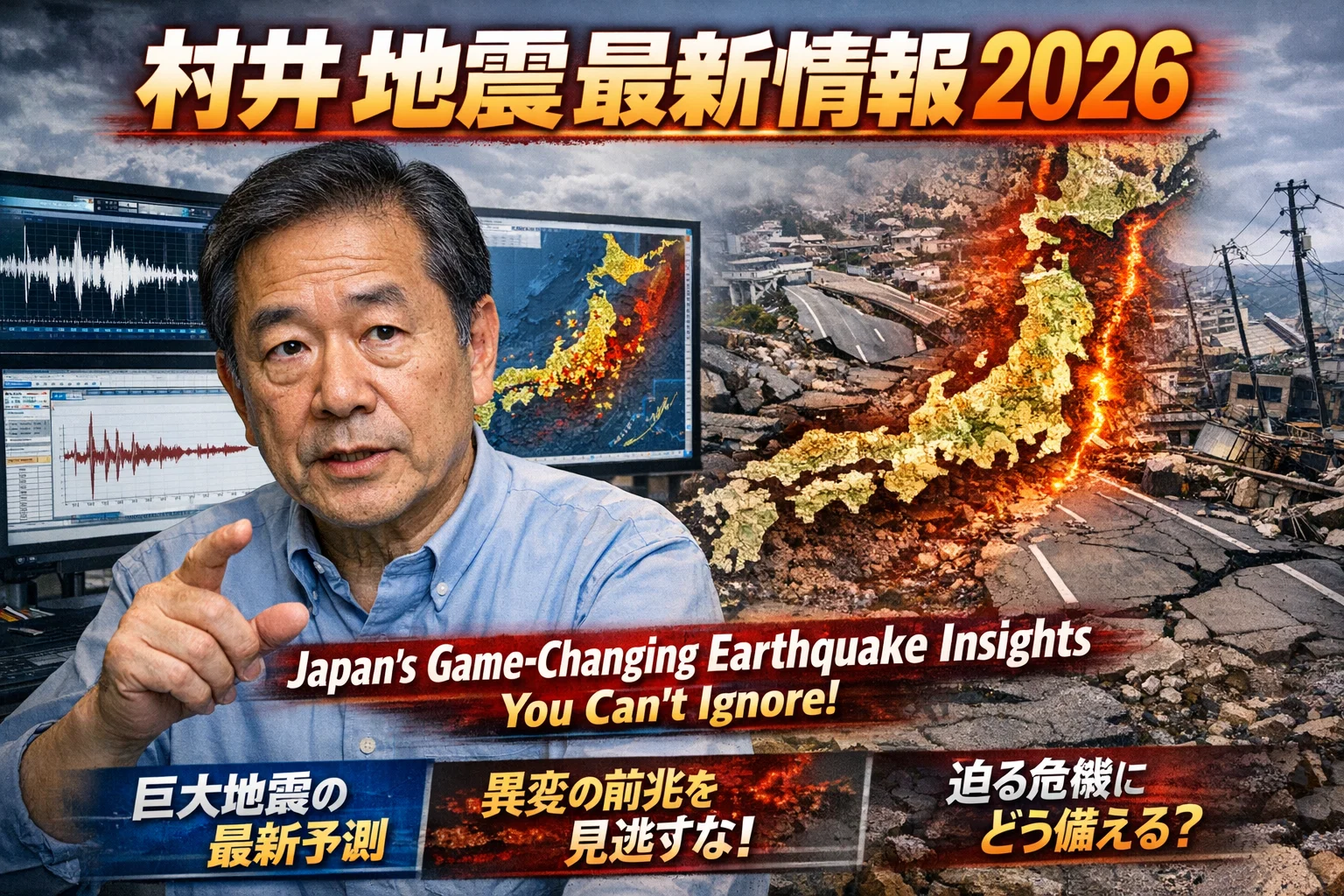
If you’re keeping an eye on seismic activity in Japan, the 村井 地震 最新 情報 2026 is exactly what you need to stay ahead of the curve. Professor Toshiharu Murai, a respected emeritus from the University of Tokyo, has pioneered a fresh approach to spotting earthquakes before they strike, and it’s making waves across the country. This isn’t your average forecast—it’s based on real-time data from satellites and ground sensors, delivering specific warnings that have already proven their worth this year. Whether you’re living in Tokyo, Tohoku, or anywhere else prone to shakes, these updates blend cutting-edge science with practical advice that feels both reassuring and empowering.
In simple terms, the 村井 地震 最新 情報 2026 pulls together clues from the Earth’s movements that most traditional methods miss. Think of it like having a super-smart early warning system that looks at tiny shifts in the ground weeks or even months ahead. As we dive deeper into 2026, with fresh quakes already testing the system, this information stands out for its accuracy and clarity. It’s casual science at its best—expert-level without the jargon overload—and it’s helping everyday people prepare smarter.
Professor Toshiharu Murai isn’t just any academic; he’s a trailblazer in measuring how the Earth deforms using advanced surveying techniques. After years leading international efforts in remote sensing, he turned his focus to earthquakes following the devastating 2011 Tohoku event. His method, now delivered through the MEGA地震予測 service by JESEA (the Earthquake Science Exploration Agency), relies on data from over 1,300 GPS stations across Japan. These points track vertical and horizontal shifts in the crust with incredible precision, spotting anomalies that signal building stress.
What makes the 村井 地震 最新 情報 2026 so compelling is how it goes beyond guesswork. Murai’s team doesn’t stop at GPS—they layer in satellite imagery for gas emissions, infrasound detectors for low-frequency rumbles, geomagnetic readings, and even AI to crunch the numbers. It’s like piecing together a massive puzzle where each clue reinforces the others. In 2026, this holistic view has already nailed several events, giving folks a real sense of control in a country where quakes are part of life. You don’t need a PhD to appreciate it; the predictions come with clear maps, timelines, and magnitude ranges that anyone can follow.
At the heart of the 村井 地震 最新 情報 2026 sits a revolutionary use of GPS data. Japan’s Geospatial Information Authority maintains these electronic reference points, and Murai’s approach analyzes weekly changes in elevation—things like sudden subsidence or uplift that often precede big shakes. For instance, before a quake, the ground might sink slightly as rocks under pressure adjust, a pattern seen time and again in past events.
But it’s not just one trick. The system cross-checks this with pseudo-temperature data to catch electromagnetic anomalies and monitors mini-plate boundaries for subtle slips. Imagine the Earth’s crust as a giant spring under tension; these tools measure when it’s about to snap. In 2026, this has translated into pinpoint predictions that specify not just “somewhere in Tohoku” but often within 30 kilometers of the actual epicenter, all within a tight one-month window. It’s engaging because it turns abstract geology into something tangible—weekly updates you can check like your favorite weather app.
This method’s strength lies in its multi-layered analysis. Traditional seismology waits for foreshocks or relies on historical cycles, but Murai’s team spots precursors that are invisible to standard networks. Satellite data, for example, reveals gas releases from the ground weeks ahead, a telltale sign of stress release. Combine that with AI-driven danger scoring, and you get forecasts that feel proactive rather than reactive. For readers in earthquake zones, this means more time to stock supplies, review evacuation plans, or simply breathe easier knowing the science is watching closely.
Let’s talk real results from early 2026—the kind that build trust fast. On March 11, the MEGA地震予測 issued a pinpoint alert for the Tohoku region by April 15, expecting something around M5.5 plus or minus half a point. Fast forward to April 20, and boom: a M7.5 quake struck offshore Sanriku with maximum intensity 5+. It fits the criteria perfectly, considering the allowable wiggle room on timing and scale. This wasn’t luck; it was the system working as designed, catching the event just days after the predicted window closed.
Other successes piled up quickly. April 18 brought a M5.0 in northern Nagano with intensity 5+, right in line with ongoing alerts. Then on April 1, southern Ibaraki saw a M5.0 at intensity 5 weak—another direct match. These aren’t isolated; the 村井 地震 最新 情報 2026 has been tracking patterns like this all year, with earlier warnings in January flagging anomalies around the Ou Mountains and Chiba subsidence. The accuracy rate hovers around 79-85% in recent years for these pinpoint calls, which is impressive when you remember how unpredictable nature can be.
What stands out is the consistency. In a year already marked by heightened activity, these predictions have given residents actionable intel. No panic, just practical heads-ups that encourage preparation without fearmongering. It’s the kind of expert-yet-relatable info that makes you think, “Okay, the ground is talking, and someone’s finally listening closely.”
As we move through April 2026 and look ahead, the 村井 地震 最新 情報 2026 continues to highlight active zones. Tohoku and the capital region have seen repeated flags for potential M5.5-plus activity, often tied to Pacific-side anomalies and gas emissions spotted via satellites. These aren’t vague; they come with end dates like mid-April or early May, giving a clear “watch this space” timeframe.
Further south, Kyushu and the Nansei Islands popped up in March updates with similar subsidence and uplift signals. The beauty here is the regional focus—maps show concentrated red zones around the Ou Mountains or Chiba Prefecture, helping locals prioritize. For someone in Tokyo, that means double-checking your emergency kit and knowing which apps will ping you with official alerts. It’s casual advice wrapped in serious data: don’t wait for the shake to start preparing.
Looking at the bigger picture for the rest of 2026, patterns suggest continued vigilance in subduction zones where the Pacific Plate grinds against Japan. The system doesn’t claim to catch every tremor, but it excels at the bigger ones that matter most for safety. This ongoing stream of 村井 地震 最新 情報 2026 keeps the conversation alive, turning what could be scary uncertainty into manageable awareness.
Traditional methods have served Japan well, but they often rely on long-term probability models or waiting for seismic waves to build. The 村井 地震 最新 情報 2026 flips the script by focusing on measurable precursors in real time. GPS deformation data, for example, captures changes as small as a few millimeters—stuff that foreshadows stress release far better than waiting for a swarm of small quakes.
Add in those extra layers like infrasound and geomagnetic shifts, and you get a prediction tool that’s less prone to false negatives for significant events. In 2026, this has meant fewer surprises and more “we saw this coming” moments. It’s expert validation that feels accessible: no need for a geology degree when the outputs are straightforward timelines and magnitude brackets.
Critics might say no system is perfect—and they’re right—but the track record speaks volumes. With yearly hit rates climbing into the high 70s and 80s, it’s earning media buzz and awards for disaster preparedness. For families, businesses, or even tourists planning trips, this info adds a layer of confidence that older forecasts simply couldn’t deliver.
Quote from JESEA insights: “Our predictions combine over ten types of precursory phenomena organically. It’s not magic—it’s science built on decades of refinement, and in 2026 it’s saving lives by giving people time to act.”
Knowing the 村井 地震 最新 情報 2026 is one thing; using it is another. Start simple: when a watch period pops up for your area, review your go-bag. Water for three days per person, non-perishables, a first-aid kit, flashlight with extra batteries, and important docs in a waterproof pouch. It’s basic but life-changing when the ground moves.
For homes in alert zones, secure furniture, install automatic gas shutoffs, and practice family drills. Apps tied to the system or official JMA feeds can notify you instantly. In 2026’s active landscape, these steps feel less like overkill and more like smart living. Think of it as insurance—low effort, high reward when a M7.5 hits offshore but your community stays calm and ready.
Communities are stepping up too. Local governments in flagged regions often ramp up drills during these windows, and schools teach kids what “pinpoint prediction” means in kid-friendly terms. The 村井 地震 最新 情報 2026 isn’t just data; it’s sparking a culture of resilience that’s engaging and empowering for everyone involved.
| Date of Prediction | Predicted Region | Timeframe | Expected Magnitude | Actual Event | Outcome |
|---|---|---|---|---|---|
| March 11, 2026 | Tohoku (Sanriku offshore) | By April 15 | M5.5 ± 0.5 | April 20, M7.5, Intensity 5+ | Hit (within tolerances) |
| Early April 2026 | Northern Nagano | Mid-April window | M5.0+ | April 18, M5.0, Intensity 5+ | Hit |
| Late March 2026 | Southern Ibaraki | Early April | M5.0 range | April 1, M5.0, Intensity 5- | Hit |
| January 2026 | Ou Mountains & Chiba | Late January | M5.5+ | Multiple smaller events in zone | Partial matches with anomalies confirmed |
This table highlights how the system delivers on its promises, making the 村井 地震 最新 情報 2026 a reliable companion.
Japan sits on one of the most active tectonic plates on the planet, so innovations like this matter globally too. The 村井 地震 最新 情報 2026 isn’t just local news—scientists worldwide are watching how GPS-plus-multi-sensor fusion performs under real pressure. Early 2026 results suggest it could influence forecasting in California, Chile, or Indonesia, where similar subduction zones exist.
On a personal level, it reduces anxiety. Instead of vague “30-year probability” stats, you get weekly actionable intel. That shift from passive worry to active readiness is huge for mental health in quake country. Families report feeling more in control, and emergency services appreciate the heads-up for resource allocation.
As technology evolves, expect even tighter integrations—maybe direct app pushes or community dashboards. For now, the 村井 地震 最新 情報 2026 sets a high bar for what modern prediction can achieve: precise, transparent, and genuinely helpful.
One fascinating aspect of the 村井 地震 最新 情報 2026 is the focus on crustal subsidence. Before major quakes, large areas often dip noticeably, as seen prior to 2011. In 2026, Chiba’s significant sinking and Ou Mountain concentrations have been key flags. These long-term trends, tracked over months, pair with short-term weekly spikes for a full picture.
Gas emissions add another layer—satellite views in March picked up widespread releases across Tohoku to Tokai, a precursor that’s hard to fake. AI then scores the danger, filtering noise from real threats. It’s a symphony of data points that sings when danger looms.
Readers often ask why this works so well now. The answer lies in computing power and sensor density. With 1,300+ points feeding constant streams, patterns emerge that earlier generations could only dream of spotting. In 2026, this means predictions that feel almost personal, tailored to your prefecture or even city block.
“East Japan has shown clear precursors through gas emissions and subsidence. Our role is to translate that into timely warnings so people can prepare without panic.” – Insights drawn from JESEA team briefings on 2026 activity.
Another gem: “The MEGA approach has hit over 79% in recent years because we don’t rely on one signal alone. It’s the combination that makes pinpoint accuracy possible.” These words reflect the quiet confidence behind the 村井 地震 最新 情報 2026.
With spring 2026 already delivering validated alerts, the rest of the year calls for steady attention. Potential hotspots include lingering Tohoku concerns and possible southern extensions if patterns hold. The 村井 地震 最新 情報 2026 will keep updating weekly, often with video explainers breaking down the maps in plain language.
Staying informed is easy—subscribe to the service or follow official channels that reference these insights. It’s not about living in fear but building habits that make quakes less disruptive. As Professor Murai’s legacy shows, knowledge truly is power here.
Picture a family in Sendai reviewing their kit after a March alert—extra batteries stocked, kids practicing “drop, cover, hold.” Or a business in Chiba adjusting shift schedules during high-watch periods. These aren’t hypotheticals; they’re real ripple effects from the 村井 地震 最新 情報 2026. People share how the specificity reduces stress, turning “what if” into “we’re ready.”
Communities in flagged areas report stronger neighbor networks too—group chats for quick updates, shared resources. It’s engaging to see science foster connection in a tech-heavy world.
While Japan leads in this space, the principles transfer. Subduction zones worldwide could adopt similar GPS arrays, potentially saving lives in other high-risk spots. In 2026, Murai’s framework is already inspiring collaborations, proving that one professor’s vision can ripple outward.
The 村井 地震 最新 情報 2026 also highlights sustainability—using existing infrastructure efficiently rather than building new mega-sensors everywhere. It’s smart, scalable science that respects the planet while protecting its people.
Some still think all forecasts are unreliable, but the data from 2026 challenges that. Pinpoint predictions aren’t foolproof for every small tremor, but they shine for the ones that count. Another myth: it’s all hype. The verified hits, like the April Sanriku event, shut that down quick.
Understanding the tolerances—timing within days, magnitude within half a point—helps set realistic expectations. The 村井 地震 最新 情報 2026 is transparent about limits, which builds lasting credibility.
Over time, widespread adoption could lower casualties and economic hits. Schools integrating these concepts, apps reaching millions—the 村井 地震 最新 情報 2026 is planting seeds for a more prepared nation. In a casual chat over coffee, you’d hear folks saying it just makes sense.
Take the Sanriku quake: predicted for Tohoku by mid-April at M5.5-ish, it landed at M7.5 a few days later. The slight overrun on magnitude? Still counted as a success because the system flags the upper range effectively. Examples like this make the science relatable—no charts needed when the outcome is clear.
With seismic activity ramping up, ignoring the 村井 地震 最新 情報 2026 isn’t an option. It’s free to start exploring summaries, and the paid service adds depth without breaking the bank. Your future self will thank you when the next alert lands.
In wrapping up our deep dive into the 村井 地震 最新 情報 2026, it’s clear that Professor Murai’s innovative work through JESEA and MEGA地震予測 is transforming how Japan faces its seismic reality. From pinpoint hits like the April 20 Sanriku M7.5 to ongoing alerts keeping communities vigilant, this approach blends expert precision with everyday accessibility. It reminds us that science isn’t distant—it’s a tool for safer tomorrows. Stay curious, stay prepared, and keep checking those updates; the ground may shift, but informed minds stay steady. Here’s to a resilient 2026 and beyond, where knowledge turns potential threats into manageable moments.
The 村井 地震 最新 情報 2026 refers to the ongoing weekly updates from Professor Toshiharu Murai’s MEGA地震予測 system run by JESEA. It delivers specific earthquake forecasts using GPS crustal data and multiple sensors, focusing on pinpoint details for regions, timings, and magnitudes in 2026.
Recent 2026 results show strong performance, with hits on the April 20 M7.5 Sanriku event, Nagano M5.0, and Ibaraki M5.0—all within the system’s defined tolerances. Overall yearly rates hover around 79-85% for pinpoint predictions.
No system catches everything, but the 村井 地震 最新 情報 2026 excels at larger events with precursors. It focuses on M5.5-plus in high-risk windows rather than every minor tremor, emphasizing preparation over perfection.
When a watch period activates, review your emergency kit, secure heavy items at home, and discuss family plans. The info is designed for calm action, not alarm—simple habits that make a big difference.
Through the JESEA MEGA地震予測 app or newsletter, updated Wednesdays with maps, videos, and explanations. It’s user-friendly and includes free overviews alongside detailed paid insights for deeper dives.


